
 Save
Save
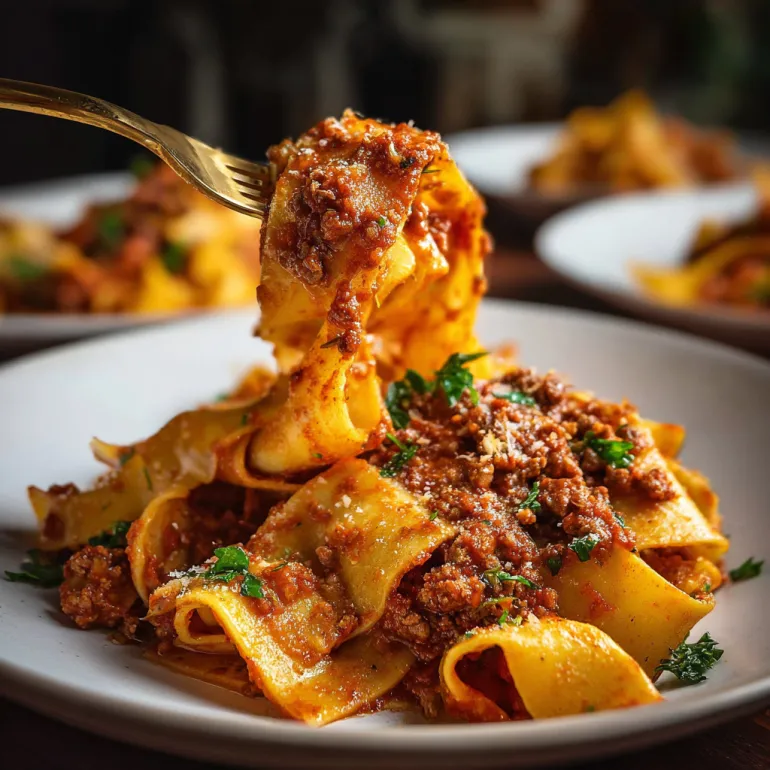
This cozy Italian pappardelle with slow-cooked beef ragu is a perfect dish for when you want to enjoy something rich, hearty, and satisfying. The tender beef melts in your mouth, and the wide noodles soak up all the flavorful sauce, making every bite a comforting experience. It’s ideal for family dinners or special evenings when you want to impress without too much fuss.
This recipe has been a favorite in my family for years especially on colder nights when we crave something warming and filling. I still remember the first time I made it for friends and how everyone asked for seconds.
Ingredients
- Beef Chuck: 2 pounds cut into large chunks is the best choice because it has enough fat marbling to become tender during slow cooking
- Pappardelle Pasta: 1 pound wide and flat noodles that hold the sauce exceptionally well because of their size and texture
- Carrot: 1 large diced adds a natural sweetness which balances the savory meat flavors
- Celery: 1 stalk diced brings earthy undertones that deepen the sauce’s complexity
- Onion: 1 large diced serves as the flavor base creating a rich aroma when cooked down
- Garlic: 4 cloves minced gives aromatic richness that elevates the entire dish
- Tomato Paste: 2 tablespoons intensifies the tomato flavor adding depth and a slight sweetness
- Crushed Tomatoes: 28 ounce can forms the main body of the sauce opt for good quality canned tomatoes for best taste
- Beef Broth: 2 cups adds depth and richness helping the beef become fork tender
- Red Wine: 1 cup use a dry red wine you enjoy drinking to infuse the sauce with a robust flavor
- Bay Leaves: 2 add subtle herbaceous notes enhancing the slow-cooked flavor
- Fresh Rosemary or Thyme: 1 sprig elevates the sauce with aromatic depth and freshness
- Olive Oil: 2 tablespoons for sautéing the vegetables and browning the beef adds a hint of fruitiness
- Salt and Pepper: to taste essential for seasoning every layer of the dish
- Parmesan Cheese: freshly grated optional for garnish adding a salty nutty finish
Step-by-Step Instructions
- Sear the Beef:
- Heat olive oil in a large Dutch oven or heavy-bottomed pot over medium-high heat. Season the beef chunks generously with salt and pepper. Sear them on all sides until browned which takes about 3 to 4 minutes per side. This step locks in the flavor and helps develop a rich crust. Remove the beef from the pot and set aside.
- Sauté the Vegetables:
- In the same pot add the diced onion carrot and celery. Cook them gently over medium heat until they are softened which usually takes about 5 to 7 minutes. This makes the vegetables sweet and tender creating a perfect base. Add the minced garlic and tomato paste then stir for about 1 to 2 minutes until fragrant this unlocks the aromatic richness of the garlic and deepens the flavor of the tomato paste.
- Deglaze with Red Wine:
- Pour in the red wine carefully scraping the browned bits from the bottom of the pot with a wooden spoon. Let it simmer for about 2 to 3 minutes which allows the alcohol to cook off and the flavors to concentrate.
- Build the Sauce:
- Add the crushed tomatoes beef broth bay leaves and fresh rosemary or thyme to the pot. Return the seared beef pieces ensuring they are fully submerged in the sauce. These liquids will slowly tenderize the beef and develop the sauce’s rich character.
- Slow Cook the Ragu:
- Cover the pot with a lid reduce the heat to low and let the sauce simmer gently for 2 to 3 hours. Stir occasionally to prevent sticking. The beef will become fork tender and the sauce will thicken during this time. Once done shred the beef with two forks and stir it back into the sauce. Taste and adjust seasoning with salt and pepper.
- Cook the Pappardelle:
- While the ragu is finishing bring a large pot of salted water to a boil. Cook the pappardelle until al dente according to the package instructions. Before draining reserve half a cup of the pasta water which can be used to loosen the sauce if necessary.
- Combine and Serve:
- Toss the cooked pappardelle with enough beef ragu to coat every strand. Add a splash of reserved pasta water if you want a looser sauce. Serve immediately garnished generously with freshly grated Parmesan cheese.
 Save
Save
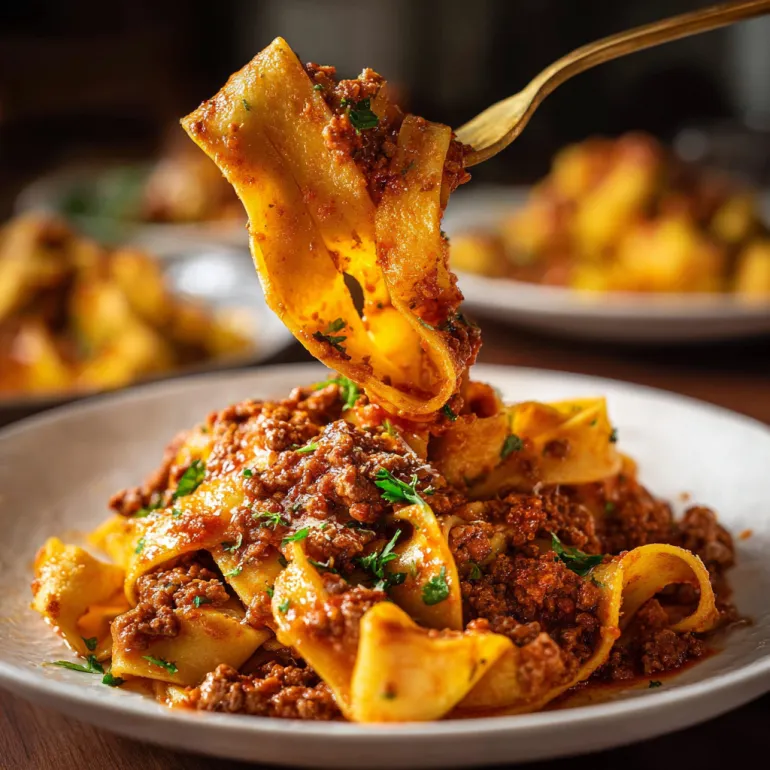
My favorite ingredient has to be the slow-cooked beef it transforms from a tough cut into meltingly tender pieces full of flavor. I always think of cozy winter evenings when this dish is on the table surrounded by family and laughter.
Storage Tips
Store leftovers in an airtight container in the refrigerator for up to three days. To reheat add a bit of water or broth to loosen the sauce and warm gently on the stove. You can also freeze portions in freezer-safe containers for up to three months for easy meals ahead.
Ingredient Substitutions
If you don’t have beef chuck use brisket or short ribs as alternatives because they also become tender when slow-cooked. For pasta you can substitute pappardelle with fettuccine or tagliatelle which have a similar shape. If you prefer no alcohol use additional beef broth or grape juice with a splash of vinegar instead of red wine.
Serving Suggestions
Serve this pappardelle ragu with a side of garlic bread and a fresh green salad tossed in a simple vinaigrette. A glass of the same red wine used in cooking pairs beautifully. Sprinkle extra Parmesan on top along with some fresh basil leaves for an elegant touch.
Cultural Context
This dish hails from Tuscany in Italy where slow-cooked meat sauces are a tradition especially for weekend family meals. The name pappardelle comes from the Italian verb pappare which means to gobble up eagerly fitting for such a satisfying and rich meal. It represents rustic Italian cooking that emphasizes quality ingredients and slow simmering.
Recipe FAQs
- → What cut of beef works best for this dish?
Beef chuck is ideal due to its marbling and tenderness after slow cooking, providing rich flavor and a melt-in-your-mouth texture.
- → Can I use another pasta if pappardelle is unavailable?
Yes, wide flat pastas like fettuccine or tagliatelle work well, as they hold the thick meat sauce nicely.
- → Why is red wine included in the sauce?
Red wine adds depth and complexity, enhancing the savory notes and enriching the sauce’s flavor profile.
- → How do I ensure the beef is tender?
Slow simmer the beef for 2-3 hours until fork-tender, allowing connective tissues to break down and flavors to meld.
- → Is it necessary to reserve pasta water when draining?
Reserving some pasta water helps loosen the sauce for better coating and a smooth texture when combined with the noodles.
- → Can I prepare the sauce in advance?
Absolutely. The sauce can be made a day ahead, which often enhances the flavors when reheated before serving.